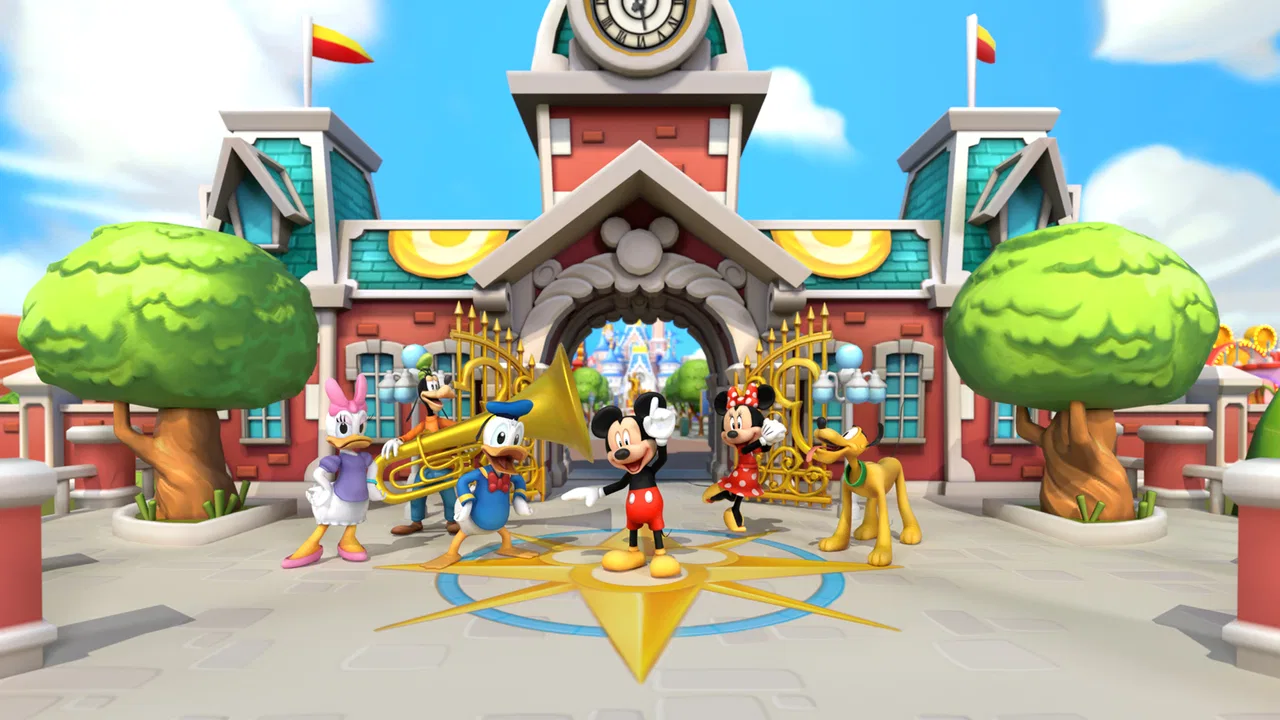
Disney Magic Kingdoms
- 4.5
- Rating
- 100.00M
- Installs
- Free
- Price

 Analysis by App-foxy
I first approached Disney Magic Kingdoms expecting a light theme-park builder, the kind of game I could open for a few minutes and leave without much thought. That impression is partly right, but it misses what keeps the game going. The real appeal is the small cycle of choosing an action, watching it complete, collecting the result, and immediately finding another reason to improve the park. It is less about designing one perfect park in a single sitting and more about returning to a growing Disney-themed project.
Gameloft SE presents it as a free simulation game for Everyone, and that description fits the accessible presentation. I can place attractions, manage character activities, and gradually make the park feel more complete. The familiar Disney setting does much of the emotional work, but the game still needs a workable routine underneath the characters and scenery. In my experience, it succeeds when I treat it as a relaxed progress game rather than a fast construction sandbox.
The current version is 11.3.1b, and the game supports devices running Android 7.0 or later. It has reached over 100 million installs, with an average rating of 4.4 from roughly 724 thousand ratings and around 39 thousand reviews. Those figures suggest a very broad audience, but they do not remove the important question: is this the kind of park-building rhythm you actually enjoy?
In-Depth Coverage of Disney Magic Kingdoms
How the park-building loop feels in everyday play
I look at the park-building loop as a sequence of small decisions rather than a continuous construction session. This section considers how choosing, collecting, and placing things can fit into ordinary breaks—and why a little planning makes those visits feel more purposeful. Next, I turn to the practical checks that can help when a session does not go as expected.
The first action is simple, but it sets the whole pace
My first useful decision is usually not a grand layout choice. I look at what a character can do, what activity is available, and which action will move the park forward most efficiently. That may mean sending a character on a task, placing an attraction, or collecting something that has finished. The game makes this approachable because I do not need to understand a complicated management system before I can begin.
That simplicity is helpful for younger players and for anyone who wants a calmer game. I can open it while waiting for a bus or during a short break, make a few selections, and close it again. The park continues to feel like a project even when I am not spending a long uninterrupted session inside it.
At the same time, the first action is more meaningful than it looks. If I spend every available resource immediately, I may have less flexibility for the next attraction or character requirement. I learned to pause before tapping the most obvious option and check whether a smaller action would help unlock a more useful step later. This is one of the game’s less visible lessons: the best short-term reward is not always the best park-building decision.
Placement also affects how personal the park feels. I am not simply completing a checklist; I am deciding which areas look finished and which ones can remain under construction. Players who enjoy arranging themed spaces will get more from this than players who only want to unlock content as quickly as possible. The creative side is present, but it works within the game’s progression rather than replacing it.
Feedback arrives in small, readable pieces
After I assign an activity or complete a construction step, the feedback is clear: something becomes available, a character advances, or the park gains another visible element. That response is important because the game’s tasks are often modest. A single action may not transform the park, but a series of completed actions makes the improvement easy to notice.
I like this rhythm because it gives every visit a practical purpose. I can check which tasks are complete, collect their results, and use those results to prepare the next group of actions. The interface encourages a habit of scanning rather than demanding constant concentration. I am rarely wondering what to do next, although I sometimes need to decide which available objective deserves priority.
The feedback is especially satisfying when a previously empty section begins to look like a real Disney park. An attraction is not only a number in a menu; it changes the visual identity of the space. Characters moving through their activities also make the park feel less static. These details matter because simulation games can otherwise become spreadsheets with decorations attached.
There is a trade-off here. The same steady feedback can feel slow if I want immediate building and rapid unlocking. The game is designed around waiting for progress to mature, so it rewards patience more than urgency. If I am in the mood for a city builder where every tap produces an instant structural change, this can feel restrictive. The game’s strength is its gentle cadence, and that cadence is also its main limitation.
Rewards are useful when I resist spending them too quickly
The reward stage is where the loop becomes more strategic. Completing activities gives me material for the next decision, but the reward does not always translate into an immediate attraction or dramatic upgrade. I may need to collect several pieces of progress before a larger goal becomes possible. That creates a mild planning layer without turning the game into a demanding management simulator.
You May Also Like

 AliExpress - Shopping App
AliExpress Makes Global Shopping Feel Personal, but Shoppers Bear the Risk
AliExpress turns a global marketplace into a pocket-sized discovery engine. Its reach is useful, its shopping loop compelling, and its trade-offs easy to miss.

 Lords Mobile: Kingdom Wars
Lords Mobile Is a Kingdom-Building Routine, Not a Quick Match
A case-by-case verdict on the building, battles, device demands, and social commitments that make Lords Mobile rewarding for some players and exhausting for others.

 PDF Scanner app - TapScanner
TapScanner Makes Paperwork Easier to Capture, Check, and Share
TapScanner makes scanning with a phone feel less like a rescue operation and more like a dependable step in getting work done. Its capture tools are useful, though not flawless.

 Block Blast!
 Shows How Much a Puzzle Game Can Leave Out
A quiet grid game shows why puzzle players increasingly value instant clarity, repeatable skill and low-pressure play—and where the genre still needs to catch up.

 Family Space
 Review: A Shared Routine That Makes Family Life Easier
A parenting app earns its place not by adding more noise, but by making everyday coordination easier. Family Space gets that balance mostly right.

 1Weather Forecasts & Radar
 Makes the Daily Check Worthwhile
A good forecast does more than predict rain. This week's pick turns changing conditions into a clear, practical reason to check before you step outside.
More From Our News Desk
View All News


My practical advice is to keep a short mental list of the next two goals instead of focusing only on the task that is flashing in front of me. If a character can perform more than one useful activity, I choose the one that supports the goal with the fewest future detours. This makes the park grow more smoothly and reduces the feeling that I am simply tapping whatever is available.
The reward system also explains why the game can be enjoyable in short sessions. I do not need to finish a major project to feel that I achieved something. Collecting completed work, adding a small visual improvement, or preparing the next task can be enough. The game gives me a clear stopping point, which is valuable on a phone.
However, the free-to-play structure deserves attention. The game is free to download, with in-app purchases ranging from $0.99 to $199.99 per item. I would not recommend approaching it as though every delay should be removed with a purchase. The more comfortable experience comes from accepting that some progress is intentionally paced. Paying may be attractive to players who want to move faster, but the basic appeal is stronger when I judge progress by what I completed rather than by how quickly I reached the next unlock.
The session resets without making the previous one feel wasted
A good mobile loop needs a reason to return, and this game finds it in unfinished tasks. When I close the app, I usually leave behind activities that will later produce something useful. Opening it again gives me a compact reset: collect what is ready, inspect new choices, and assign the next round. The park has not become a completely different place, but it has moved forward.
This reset works well for a daily routine. I can play in the morning by starting longer activities, check back later to collect them, and use a shorter evening session to rearrange priorities. I do not need to reserve an hour for the game. In fact, long sessions can expose the limits of the design because the available actions may eventually narrow into waiting or resource planning.
One concrete use case is a player who likes having a low-pressure game beside more demanding titles. After work, I can open the park, collect finished tasks, place a newly available attraction, and stop before the experience turns into a chore. The game gives me a sense of maintenance and ownership without requiring the constant attention of a competitive game.
The reset is less appealing if I dislike timers, repeated collection, or returning to a game because something has finished. Players looking for a complete experience in one sitting may feel that the game is asking them to leave just as often as it invites them to continue. That is not a flaw in execution so much as a fundamental design choice, but it should guide your expectations before installing it.
Disney familiarity helps, but it does not replace the simulation
The Disney identity makes the early decisions feel warmer than they might in an anonymous park builder. Recognizable characters and attractions give the park an emotional direction, and each addition feels connected to a larger fantasy rather than being a generic building. For families, Disney fans, and players who enjoy collecting familiar faces, that connection is a significant advantage.
Still, I would not choose this game solely because I like Disney films. The daily experience is built around managing activities and gradual expansion. If I want a story-driven adventure with constant dialogue, this is not the right substitute. If I want a detailed economic simulator with complex transport, staffing, and visitor behavior, it is also too light. Its identity sits between collection, decoration, and time-based simulation.
Compared with a traditional city-building game, this one feels more guided and character-focused. I spend less time balancing a realistic municipal economy and more time helping a themed park take shape. Compared with an open-ended creative builder, it gives me clearer objectives but fewer reasons to ignore progression completely. That middle ground is why it works for casual players, though it may frustrate experts who want total control over every system.
Three habits make the loop more satisfying
First, I group my actions by the next meaningful goal. Rather than sending every character on the fastest available task, I choose activities that support the attraction or character development I am already pursuing. This reduces the number of visits where I collect rewards but cannot use them for anything useful.
Second, I treat the park layout as a visual project, not only a storage area for attractions. Leaving a little breathing room around important areas makes new additions easier to appreciate. I also avoid filling every available space immediately, because an unfinished park can become difficult to read once everything is packed together.
Third, I use the game as a short-session title instead of forcing it into a long-session routine. A quick visit has a clear beginning and end: collect, choose, place or assign, then leave. When I try to extract constant entertainment from it, the waiting structure becomes more noticeable. When I accept its stop-and-return design, the same pacing feels intentional.
Who should play, and who should skip it
I would recommend Disney Magic Kingdoms to players who enjoy gradual collection, light planning, recognizable Disney themes, and decorating a park over time. It is also a good fit for families who want an approachable simulation game with an Everyone content rating, provided adults explain that optional purchases exist and that progress is designed to take time.
I would be more cautious recommending it to anyone who dislikes in-app purchases, timer-based progression, or games that ask for repeated check-ins. The purchase range is wide enough that players should decide their spending boundaries before they begin. I would also point strategy-heavy simulation fans toward a deeper city or theme-park management game, where systems such as finances and logistics matter more than character-led activities.
The game’s strongest audience is the person who wants a friendly digital park to revisit, not the person searching for a definitive theme-park simulator. That distinction is important. The Disney presentation makes the loop inviting, but the long-term experience depends on whether collecting and gradual expansion are satisfying to you.
My verdict on the action, feedback, reward, and reset
After spending time with the game, I see its core loop as a well-shaped sequence: choose an activity, receive clear feedback, collect a reward, improve the park, and return later because another task is ready. None of those steps is especially complex by itself. Together, they create a comfortable routine that is easy to understand and surprisingly effective at encouraging one more visit.
The best moments come when a small decision produces a visible change. I open the park expecting to collect one finished task, then notice that the reward supports a new attraction or a better use of a character. That is the point where the game feels more like a living project than a collection of timers. The weakest moments arrive when I have already made the available decisions and can do little except wait or consider spending.
For me, the final judgment is positive with a clear condition: enjoy the pace, and the game becomes a pleasant Disney-themed simulation for short, repeat visits. Demand instant expansion or deep management, and its limitations appear quickly. It is free to start, widely played, and polished around a simple return loop, but its value depends on patience and sensible spending habits. I would recommend trying it to anyone who wants a relaxed park-building game with familiar characters, while reminding them that the most rewarding progress comes from planning the next visit rather than rushing through the current one.
FAQs for Disney Magic Kingdoms
01What is Disney Magic Kingdoms about?
Disney Magic Kingdoms is a mobile game where players can build their own Disney park. The game features iconic Disney characters and allows players to complete quests, collect attractions, and overcome challenges posed by villains. It's a blend of strategy, creativity, and fun, perfect for Disney fans and casual gamers alike.
02Is Disney Magic Kingdoms free to play?
Yes, Disney Magic Kingdoms is free to download and play. However, it includes in-app purchases that can enhance gameplay, such as premium currency and special items. While you can enjoy the game without spending money, these purchases can speed up progress and unlock exclusive content.
03What devices are compatible with Disney Magic Kingdoms?
Disney Magic Kingdoms is compatible with both Android and iOS devices. Ensure your device meets the minimum system requirements for optimal performance. Regular updates are released, so keeping your device updated will help avoid any compatibility issues and ensure a smooth gaming experience.
04How often are new updates or events available in Disney Magic Kingdoms?
The game frequently updates with new content, including events, characters, and attractions. Developers often tie updates to Disney movie releases or seasonal events. This keeps the game fresh and engaging, providing players with new challenges and rewards regularly. Check the app store for the latest version.
05Can I play Disney Magic Kingdoms offline?
Unfortunately, Disney Magic Kingdoms requires an internet connection to play. This is necessary for accessing new events, updates, and syncing progress across devices. A stable connection ensures you can enjoy all features and participate in limited-time events without interruptions.
Pros
- Stunning graphics and enchanting animations.
- Frequent updates with new Disney characters.
- Engaging storyline with classic Disney charm.
- User-friendly interface and easy navigation.
- Exciting events and challenges to keep players hooked.
Cons
- In-app purchases can be quite costly.
- Requires a stable internet connection.
- Long wait times for building upgrades.
- Some events can be overly challenging.
- Large game size may take up significant storage.

Disney Magic Kingdoms
Gallery